

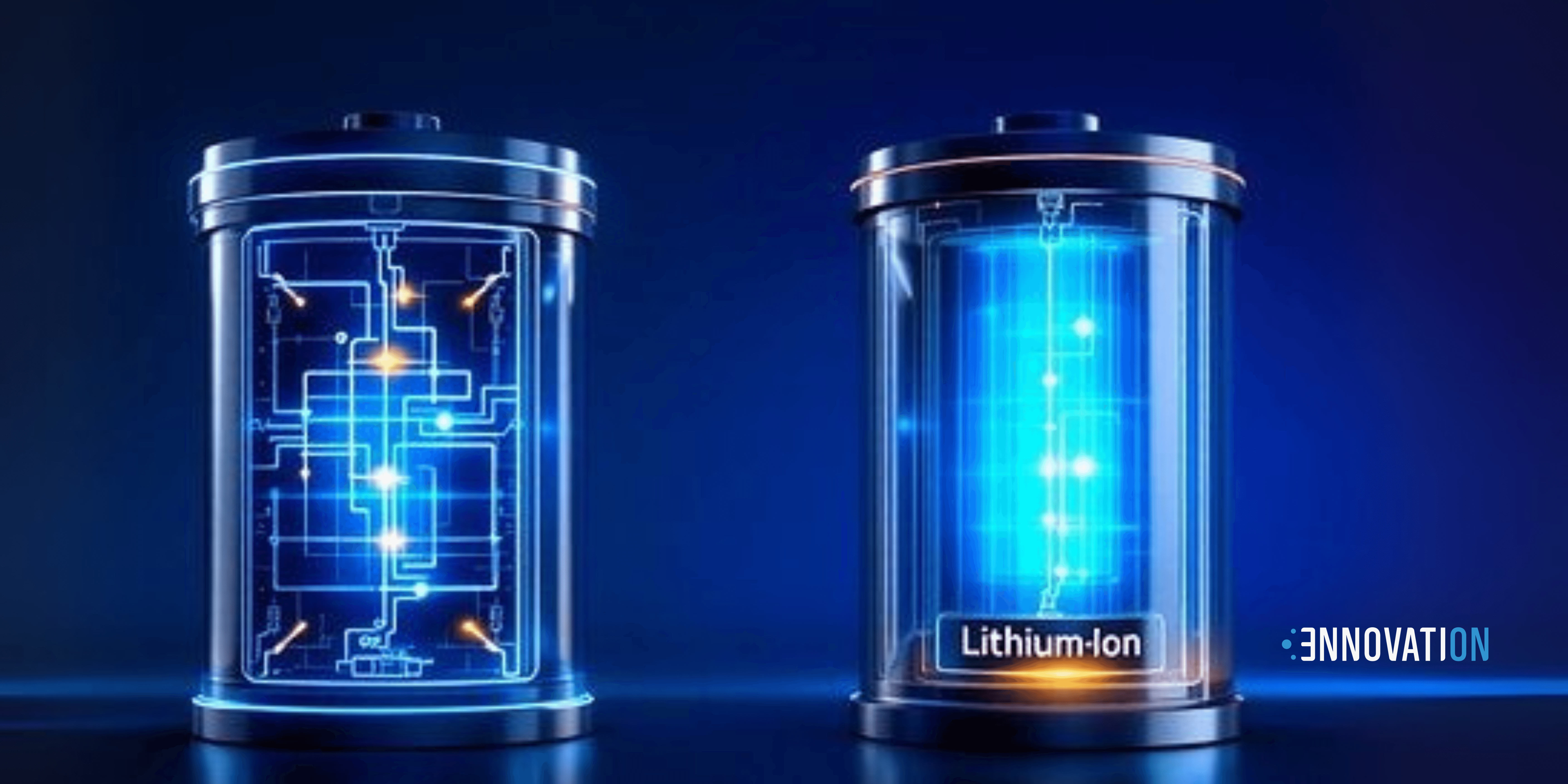
Lithium-ion batteries taken from electric cars after several years of operation still retain about 70–80% of their original capacity. This means that although their driving range in a vehicle decreases, such batteries still have significant energy potential and can be used for energy storage, where efficiency requirements are lower. [1,2]
Why is it worth using second-life electric vehicle batteries?
More and more companies and individual users are interested in giving EV batteries a second life as a cheaper and more environmentally friendly alternative to new cells. What are the main reasons for this trend?
Firstly, lower purchase costs of used EV batteries. One of the main reasons is economics. Used electric car batteries are significantly cheaper than brand-new cells – it is estimated that they may cost around 60% of the price of a new battery. [3] Thanks to this, an energy storage system built on a used car battery is more cost-effective and has a shorter return on investment (ROI).
Secondly, ecology and sustainability. Reusing car batteries fully aligns with an ecological approach. By giving batteries a second life, we reduce waste and decrease the demand for raw material extraction, such as lithium, cobalt, nickel, etc. It is worth noting that recycling lithium-ion batteries makes it possible to recover about 300 kg of lithium from each ton of processed batteries. This is quite a high result, which can reduce the need for mining these raw materials by as much as 30–50%. [4]
Thirdly, the high availability of used cells. As recently as 2018, the number of new electric vehicles (EVs) in Europe was doubling each year, and by 2023 EV sales were already 30% higher than the year before. [5] This means that more and more batteries will become available for reuse after their service life in cars.
For example, hybrid models such as the Peugeot 3008 II Hybrid4 or DS7 Crossback e-Tense use smaller NMC 622 modules (13.2 kWh, 96s1p, 7 modules), which after replacement in the vehicle can be repurposed for so-called “second-life storage.” On the other hand, large commercial vehicles such as the Ducato High Range (NMC 811, 79 kWh, 108s14p, 14 modules) or the Maserati GranTurismo (NMC 622, 90.5 kWh, 701 V, 32 modules) provide highly efficient cells with high energy density.
In practice, batteries recovered from cars – ranging from small 48-volt NMC modules (0.876 kWh, 1P12S) used, for example, in the Peugeot 308 Hybrid 48 V, to full LFP traction packs of 52 kWh (1P110S, 4 modules) from the Citroën e-Berlingo – can be used in both residential and industrial installations.
The most common car models whose batteries may enter the secondary market include, among others:
Peugeot e-208, Opel Corsa-e, Citroën ë-C4, DS3 Crossback e-Tense – NMC 622 batteries, 50 kWh, 108s2p, 18 modules
Peugeot e-2008 (2023), Opel Mokka-e, Fiat 600e, Alfa Romeo Kid – NMC 811 batteries, 54 kWh, 102s1p, 17 modules
Peugeot e-Traveller, Opel Zafira-e Life, Citroën ë-Spacetourer – commercial NMC 622 packs, 75 kWh, 108s3p, 27 modules
Fiat 500e (High Range, Abarth) – compact NMC 622 batteries, 42 kWh, 96s2p, 9 modules
Jeep Avenger (48 V) – small hybrid NMC systems, 0.876 kWh, 1P12S, 2 modules
DS4 e-Tense PHEV, Opel Astra Hybrid, Citroën C5X Hybrid – medium NMC 652015 packs, 12.44–14.22 kWh, 84s1p, 6 modules
Maserati Grecale (EV) – large NMC 811 pack, 105 kWh, 364 V, 33 modules
Ducato & Movano Electric – commercial NMC 811 batteries, 111 kWh, 331 V, 15 modules
Such a wide range makes it relatively easy to select a used battery with the required capacity and parameters for a specific project, such as an energy storage system.
The full list of car batteries can be found at the end of the article.
Used Electric Vehicle Batteries “Second Life” – Why are advanced BMS and EMS systems needed?
Of course, reusing batteries from electric vehicles (EVs) is not only about benefits – there are also technical and logistical challenges.
Firstly, every car battery can be different. They vary in nominal voltage, cell chemistry, capacity, and the number of modules. The lack of standardization makes it difficult to create universal storage solutions.
Secondly, safety and management of a used battery require the application of proper electronics and software. A BMS (Battery Management System) is essential – a system that manages the battery at the cell level.
Essential Management Systems for Used Car Batteries
 |  |
| BMS – Battery Management System |
EMS – Energy Management System |
At Ennovation Technology, we are a producer of BMS software that perfectly addresses the challenges associated with used batteries. Our proprietary BMS provides:
What sets us apart from other providers is the fact that we are a software developer, which allows us to configure our solutions according to our clients’ specific requirements.
| The second key element is the EMS (Energy Management System) – a system for managing energy at the level of the entire storage unit and its environment. The EMS acts as a supervisory controller that decides when and how the battery should charge or discharge, depending on grid conditions, the availability of renewable energy, and consumer demand. A well-programmed EMS is the heart and brain of an energy storage system, as it performs automated operations based on the goal defined by the client (e.g., self-consumption or price arbitrage). Discover the proprietary EMS system from Ennovation Technology – we are a Polish producer of software for managing energy storage and distributed infrastructure.
|
In summary, the BMS takes care of the battery’s health, while the EMS ensures the efficient use of energy across the entire storage system in a broader context.
Contact our expert for details:
Michał Borowski
m.borowski@ennovationtech.eu
+48 669 693 896.
Used Electric Vehicle Batteries – Practical Applications
Below are several areas where second-life EV batteries are already proving effective today:
 |  |  |
Home Energy Storage (DIY) | Companies and Enterprises | Off-grid and Mobile Systems |
| Enthusiasts build their own home power banks from EV modules, combining them with photovoltaics. This allows them to store surplus energy, increase self-consumption, and lower bills. Additionally, such storage provides independent backup power.
| Used EV batteries help businesses reduce energy costs and increase reliability. Storage systems charge during off-peak hours and discharge during peak demand, lowering power consumption and reducing CO₂ emissions.
| Second-life batteries provide access to energy in remote locations – at recreational plots, mountain shelters, on boats, or in campers. They enable comfortable camping far from civilization and the creation of island energy storage systems, making it possible to use electricity without a grid connection.
|
Used Electric Vehicle Batteries – In What Areas Does Ennovation Technology Support Its Clients?
The second life of batteries is one of the pillars of future distributed energy – it enables efficient use of resources, lower energy storage costs, and reduced waste.
However, for such solutions to operate safely and efficiently for many years, it is essential to implement proper management systems – BMS (Battery Management System) and EMS (Energy Management System). Without them, used batteries may be exposed to overheating, faster degradation, or the risk of damage, which is why professional software and system integration are crucial.
This is precisely where we support our clients, offering dedicated BMS and EMS systems that monitor cell parameters, ensure safety, provide balancing, and enable optimal use of stored energy.
We also provide comprehensive consulting and component selection: we help assess the condition of used cells, choose the right battery modules, inverters, cooling and protection systems, and then design the complete solution tailored to specific needs – from small home storage systems to larger commercial installations.
Contact our expert for more details.
Michał Borowski
m.borowski@ennovationtech.eu
+48 669 693 896.
Sources:
- https://www.adlittle.com/en/insights/viewpoints/second-life-maximizing-lifecycle-value-ev-batteries?
- https://evmagazine.com/technology/second-life-ev-batteries-pioneering-sustainability-growth?
- https://arinea.pl/blog/bateria-samochodu-elektrycznego-jako-magazyn-energii
- https://www.motofaktor.pl/recykling-baterii-li-ion-duza-szansa-dla-polski/
- https://www.money.pl/gospodarka/tak-branza-daje-drugie-zycie-akumulatorom-do-aut-elektrycznych-nie-wrzucamy-ich-do-wisly-6822603339729728a.html
| Opel Movano, Peugeot Jumper III, Peugeot Boxer III |
| Opel Movano, Peugeot Jumper III, Peugeot Boxer III |
| Ducato Low Range |
| Ducato High Range |
| Peugeot 508 II Hybrid (R8) |
| Peugeot 3008 II Hybrid4 (P84) |
| DS7 Crossback e-Tense (X74) |
| Citroën C5 Aircross (C84) |
| Opel/Vauxhall Granland Hybrid (P1U0) |
| Peugeot 508 II Hybrid (R8) |
| Peugeot 3008 II Hybrid4 (P84) 180HP |
| Citroën C5 Aircross Hybrid4 (C84) 180 HP |
| Peugeot 3008 II Hybrid4 (P84) 225-300 HP |
| DS7 Crossback e-Tense (X74) 225-300 HP |
| Citroën C5 Aircross Hybrid4 (C84) 225-300 HP |
| Opel/Vauxhall Granland Hybrid 225-300 HP |
| Citroen C5X |
| DS4 e-Tense PHEV |
| Opel Astra Hybrid |
| Peugeot 308 Hybrid 2022 |
| Peugeot 408 Hybrid 2022 |
| DS9 e-Tense 4×2 |
| Jeep Renegade |
| Jeep Compass |
| Jeep Grand Wagoner |
| Maserati M240 |
| Maserati GT |
| Maserati Quattroporte |
| RAM 1500 |
| Peugeot e-208 -P21 |
| Peugeot e-2008 -P24 |
| DS3 Crossback e-Tense ED34 |
| Citroën ë-C4 -C41 |
| Opel/Vauxhall Corsa-e – P2JO |
| Opel/Vauxhall Mokka-e PDQO |
| Jeep Avanger -J516 |
| DS3 Crossback (2023 restyling) -ED34 |
| Citroën ë-C4 (2023 restyling) -C41 |
| Citroën ë-C4x (2023 restyling) -C43 |
| Fiat 600/ Fiat 600 Abarth -600 |
| Opel Corsa Astra/ Astra Sport Tourer -OV51/52 |
| Opel/Vauxhall Mokka-e (2023 restyling) -PDQO |
| Alfa Romeo Kid -A966 |
| Peugeot e-308 -P51/52 |
| Peugeot e-2008 (2023 restyling) P24 |
| Opel/Vauxhall Corsa-e – P2JO |
| Lancia -L21 |
| Peugeot e-208 (2023 restyling) -P21 |
| Peugeot e-Traveller (50kWh) |
| Peugeot e-Expert (50kWh) |
| Peugeot e-Boxer (50kWh) |
| Citroën ë-Jumpy (50kWh) |
| Citroën ë-Spacetourer (50kWh) |
| Opel/Vauxhall Zafira-e Life (50kWh) |
| Opel/Vauxhall Zafira Vivaro-e (50kWh) |
| Fiat e-Scudo (50kWh) |
| Fiat e-Ulysse (50kWh) |
| Peugeot e-Traveller (50kWh) |
| Peugeot e-Expert (50kWh) |
| Peugeot e-Boxer (50kWh) |
| Citroën ë-Jumpy (50kWh) |
| Citroën ë-Spacetourer (50kWh) |
| Opel/Vauxhall Zafira-e Life (50kWh) |
| Opel/Vauxhall Zafira Vivaro-e (50kWh) |
| Fiat e-Scudo (50kWh) |
| Fiat e-Ulysse (50kWh) |
| Peugeot e-Traveller (75kWh) |
| Peugeot e-Expert (75kWh) |
| Peugeot e-Boxer (75kWh) |
| Citroën ë-Jumpy (75kWh) |
| Citroën ë-Spacetourer (75kWh) |
| Opel/Vauxhall Zafira-e Life (75kWh) |
| Opel/Vauxhall Zafira Vivaro-e (75kWh) |
| Fiat e-Scudo (75kWh) |
| Fiat e-Ulysse (75kWh) |
| Peugeot e-Rifter |
| Peugeot e-Partner |
| Citröen e-Berlingo |
| Opel Vauxhall e-Combo models |
| Fiat e-Doblò |
| Peugeot e-Rifter |
| Peugeot e-Partner |
| Citröen e-Berlingo |
| Opel Vauxhall e-Combo models |
| Fiat e-Doblò |
| Citroen AMI |
| Opel Rocks-e |
| Fiat Topolino |
| Opel/Vauxhall Ampera-e |
| Opel Ampera a (NMC) |
| Opel Ampera a (LMO) |
| Peugeot Ion |
| Citroën C0 |
| Peugeot 3008 -P64 |
| Peugeot 5008 -P74 |
| Opel Grandland -OV64 |
| DS8 – DS85 |
| DS4 -ED31 |
| Peugeot 408 – P54 |
| DS8 – DS85 cross |
| DS9 e-Tense 4×4-250 HP |
| 500e High Range – 500 Abarth |
| 500e Low Range |
| Ducato & Movano |
| Jeep Wrangler |
| Jeep Grand Cherokee |
| Fiat Panda |
| Fiat 500 |
| Lancia Y |
| Fiat500x |
| Fiat Tipo |
| Jeep Renegade Mild |
| Jeep Compass Mild |
| Alfa Romeo Tonale Mild |
| Maserati Ghibli |
| Maserati Grecale |
| Maserati Levante |
| Maserati Grecale |
| Alfa Romeo Tonale |
| Chrysler Pacifica |
| Peugeot 3008 hybrid 48 V |
| Peugeot 5008 hybrid 48 V |
| Citroen C5 hybrid 48 V |
| Peugeot 308 hybrid 48 V |
| Peugeot 408 hybrid 48 V |
| Opel Grandland -hybrid 48 V |
| DS4 48 hybrid V |
| Opel Frontera hybrid 48 V |
| Opel Mokka hybrid 48 V |
| Opel Corsa hybrid 48 V |
| DS3 48 hybrid V |
| Peugeot 208 hybrid 48 V |
| Peugeot 2008 hybrid 48 V |
| Fiat 600 48 V |
| Jeep Avenger 48 V |
| Peugeot 3008 -P64 |
| Peugeot 3008 PHEV -P64 |
| Module |
| Opel Crossland |
| Opel Crossland |
| Fiat Panda |
| Fiat Panda |
| Citroen C3 (2024) CC21 |
| Citroen C3 -Sedan- Aircross(2024) CC21 |
| Citroen C3 Aircross (2024) CC21 |
| Multipla (2025) |
| Peugeot Partner B9e AV |
| Citroën Berlingo B9e AV |
| Peugeot Partner B9e AR |
| Citroën Berlingo B9e AR |
| Citroen Berlingo First Electric |
| Peugeot Partner Venturi |
| Peugeot 3008 HYbrid4 |
| Peugeot 508 HYbrid4 |
| Peugeot 508 RXH HYbrid4 |
| DS5 HYbrid4 |