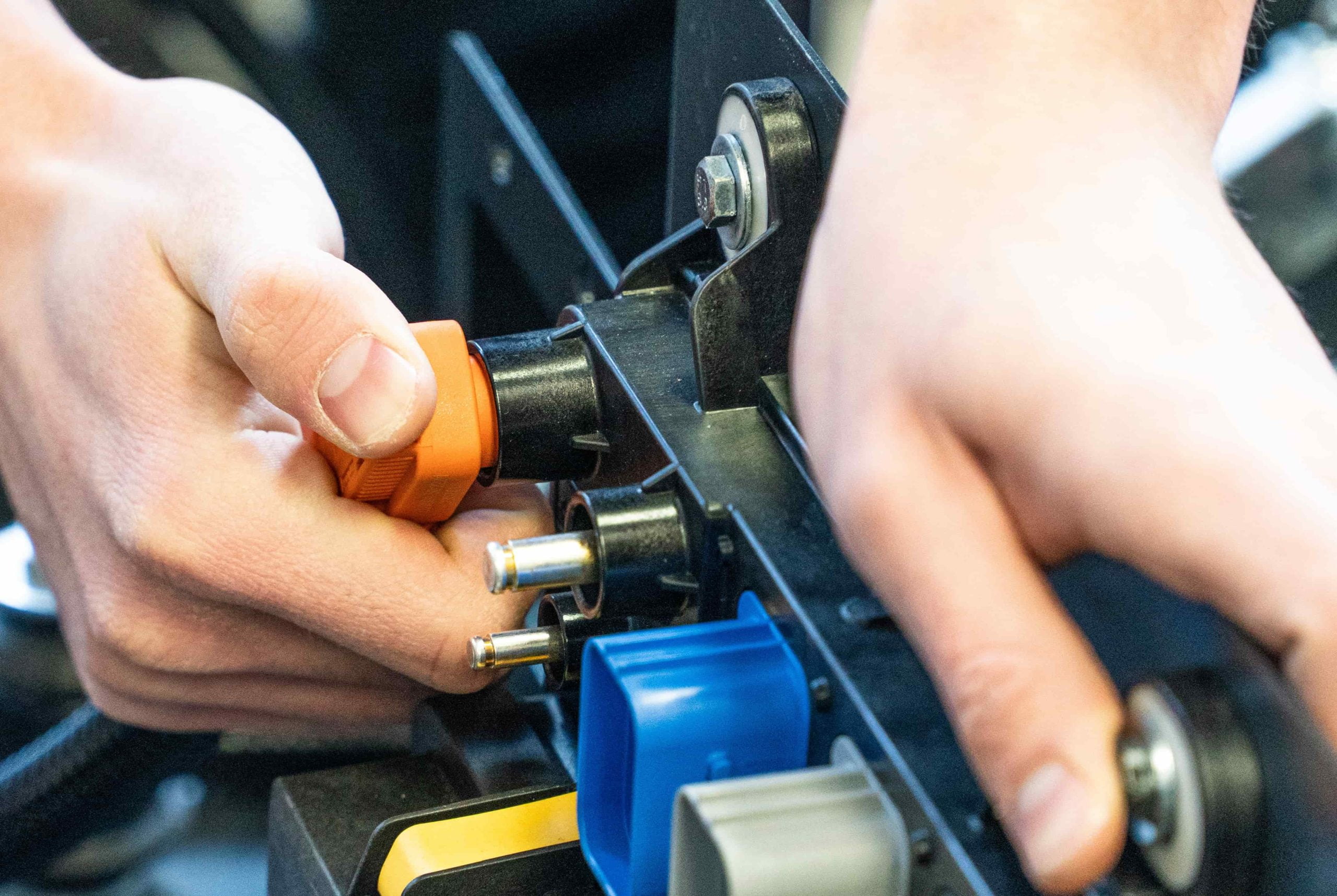
Lithium-ion battery design according to customer requirements

We design and homologate lithium-ion batteries in accordance with UN ECE R100 and UN ECE R10 regulations for vehicles, working machines and other specialist applications.

Discuss your project

Batteries tailored to a specific application

We offer batteries for vehicle categories N1, N2, N3, M1, M2, M3, as well as for working machines and other vehicles.

Designing lithium-ion batteries is a complex process that requires specialist knowledge, advanced tools and experience. Our goal is to provide customers with optimal solutions that meet their individual needs.

UN ECE R100 UN ECE R10 N1 / N2 / N3 M1 / M2 / M3 Working machines
Lithium-ion battery design

Scope of design

We carry out the project from requirements analysis, through concept development and testing, to preparation for production implementation.

01

Consultation and requirements analysis

Before starting the design process, we consult with the customer to understand their needs and expectations. We analyze, among other things, capacity, voltage, charging time, operating temperature, charge and discharge cycles, and the battery’s environmental conditions.

02

Conceptual design

Based on the collected requirements, we design the conceptual layout of the lithium-ion battery system. We take into account the cell type, battery architecture, energy management, protections, communication and integration with other systems.

03

Simulations and analyses

Before physical prototyping, we perform simulations and analyses using advanced computer tools. This allows us to assess battery behavior under different conditions, evaluate its performance and optimize parameters.

04

Prototyping and testing

Based on the conceptual design, a lithium-ion battery prototype is created. It is then subjected to tests covering electrical parameters, durability, resistance to vibration, temperature and other factors affecting safety and performance.

05

Optimization and customization

Based on test results, we optimize the design. If necessary, we adapt the battery to the specific requirements of the application and operating conditions.

06

Production implementation

After the design and optimization stage is completed, production implementation begins. This may include selecting component suppliers, developing production procedures, quality control and scaling the production process.

Do you have a project that requires individual consultation?

Contact our expert.

Michał Borowski