


Electromobility is rapidly growing, leading to innovative charging technologies for electric vehicles. Vehicle-to-Grid (V2G) technology, which can help optimize and improve the functioning of the entire power grid, is increasingly being discussed.
What is V2G and what benefits does it offer to users of the energy system and the environment? Let’s take a closer look at this innovative technology in the context of the Polish reality.
What is V2G?
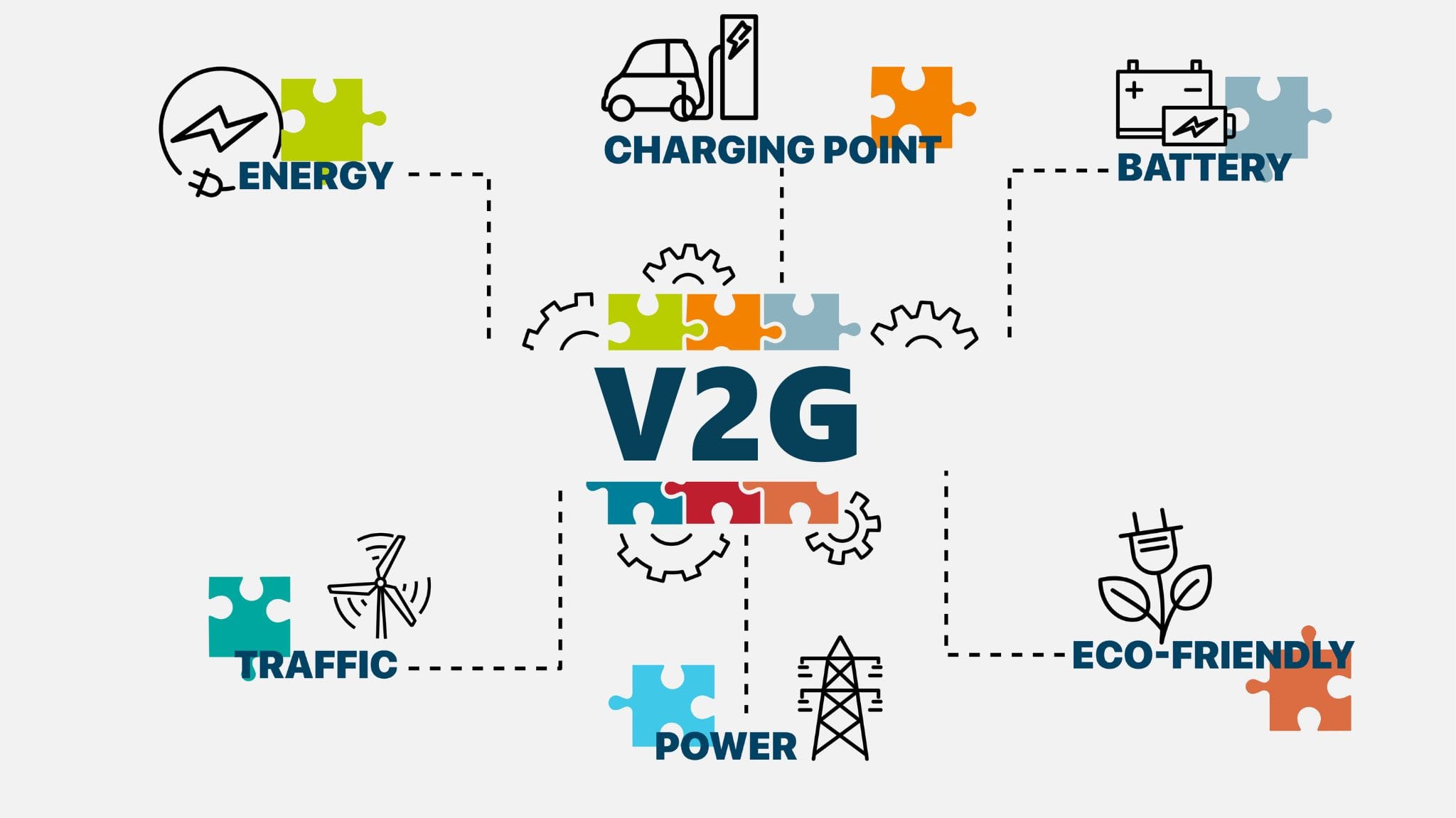
V2G, is a technology that enables bidirectional energy flow between an electric vehicle and the power grid. This means that an electric car can not only draw energy from the grid to charge its battery, but also send it back to the grid. Especially during periods of increased demand. In simple terms, an electric car equipped with V2G technology becomes a mobile energy storage unit. That can stabilize the grid and support the development of renewable energy sources (RES).
How to transform a regular electric car/battery system into a V2G system?
Standard electric cars are designed to receive electricity from the grid, but not to send it back. Charging stations, on the other hand, supply electricity without the ability to draw it. So how do you transform an electric car into a vehicle that acts as a portable energy storage unit?
The magic lies in the vehicle’s controllers, which can be used to transform an electric car into a V2G vehicle. At Ennovation Technology, we are a manufacturer of battery systems and controllers that change the battery communication protocol. This allows us to transform almost any battery from a passenger car or truck into an energy storage unit on wheels.
Want to learn more? Contact our expert.
Michał Borowski
+48 669 693 896
m.borowski@ennovationtech.eu
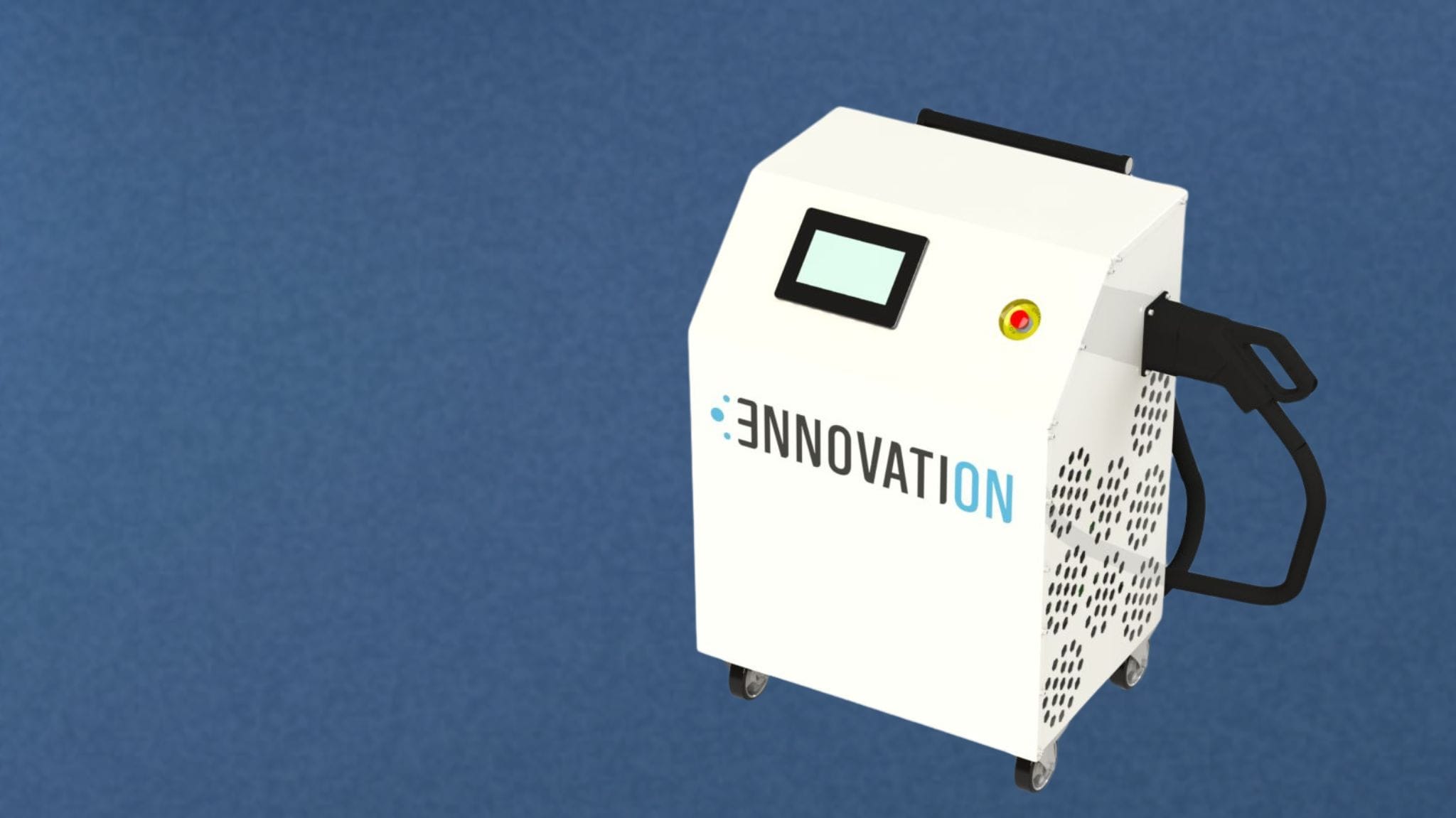
Portable V2G charger, manufactured by Ennovation Technology.
V2G, V2H and V2L – what are the differences?
To better understand V2G, it is also worth getting to know related technologies: V2H (Vehicle-to-Home) and V2L (Vehicle-to-Load). All three technologies utilize bidirectional energy flow with electric vehicles, but differ in how it is used.
The table below shows the main differences between these technologies and their practical applications:
| Technology | Description | Example of use |
|---|---|---|
| V2G (Vehicle-to-Grid) | Bidirectional energy flow between the vehicle and the power grid. | An electric car sends energy back to the grid during peak hours and draws it at night when demand is lower. |
| V2H (Vehicle-to-Home) | Bidirectional energy flow between the vehicle and the home. | Powering the home with energy from the car battery in case of a power grid failure. |
| V2L (Vehicle-to-Load) | Bidirectional energy flow between the vehicle and any electrical device. | Using an electric car to power power tools (e.g., construction tools, industrial heaters) while working in difficult terrain without access to the power grid. <br> Using the car as the main source of electricity in summer houses or campsites. |
Benefits of V2G technology
V2G technology offers a number of benefits to users:
For electric vehicle users:
- Lower operating costs: Users can earn money by selling energy back to the grid during peak demand periods. Specifically, V2G enables smart charging, allowing vehicles to charge when electricity is cheap and sell it back when prices are high. Usually the energy is cheaper at night and can be returned during during peak hours.
The power grid:
- Grid stabilization: Electric vehicles with V2G technology can stabilize the power grid, balancing fluctuations in energy supply and demand. Currently, Poland’s power grids are currently overloaded, making grid stability a critical concern. Moreover, this is further complicated by the increasing reliance on renewable energy sources, which have variable production dependent on weather conditions.
- Mobile power plants: V2G has the potential to transform electric vehicles into mobile power plants that can dynamically respond to grid needs and deliver energy where it is needed. This is an innovative approach with great environmental potential.
For the environment:
- Reduction of CO2 emissions and dependence on fossil fuels: By supporting the development of electromobility and renewable energy sources, V2G technology reduces dependence on fossil fuels. Ultimately, this contributes to the reduction of carbon dioxide emissions and improvement of air quality.
Challenges associated with V2G
Despite numerous benefits, V2G technology also faces a number of challenges. Let’s focus on the technological and economic challenges.
Firstly, technological challenges:
Frequent charge and discharge cycles of V2G battery systems affect battery life. After several thousand cycles, the battery capacity may gradually decrease, even below 80% of the original capacity.
Added to this is the lack of standardization of communication between V2G charging stations and battery systems of the same type. This is associated with less availability of controllers and specialists who can implement the project.
At Ennovation Technology, we produce universal solutions, which is our advantage among the competition.
Secondly, economic challenges:
While V2G technology has many applications and advantages, its implementation itself is not always easy. The user must take into account the costs of project creation and implementation of appropriate controllers. In addition, there is the issue of expanding the charging infrastructure, which is designed for a bidirectional system.
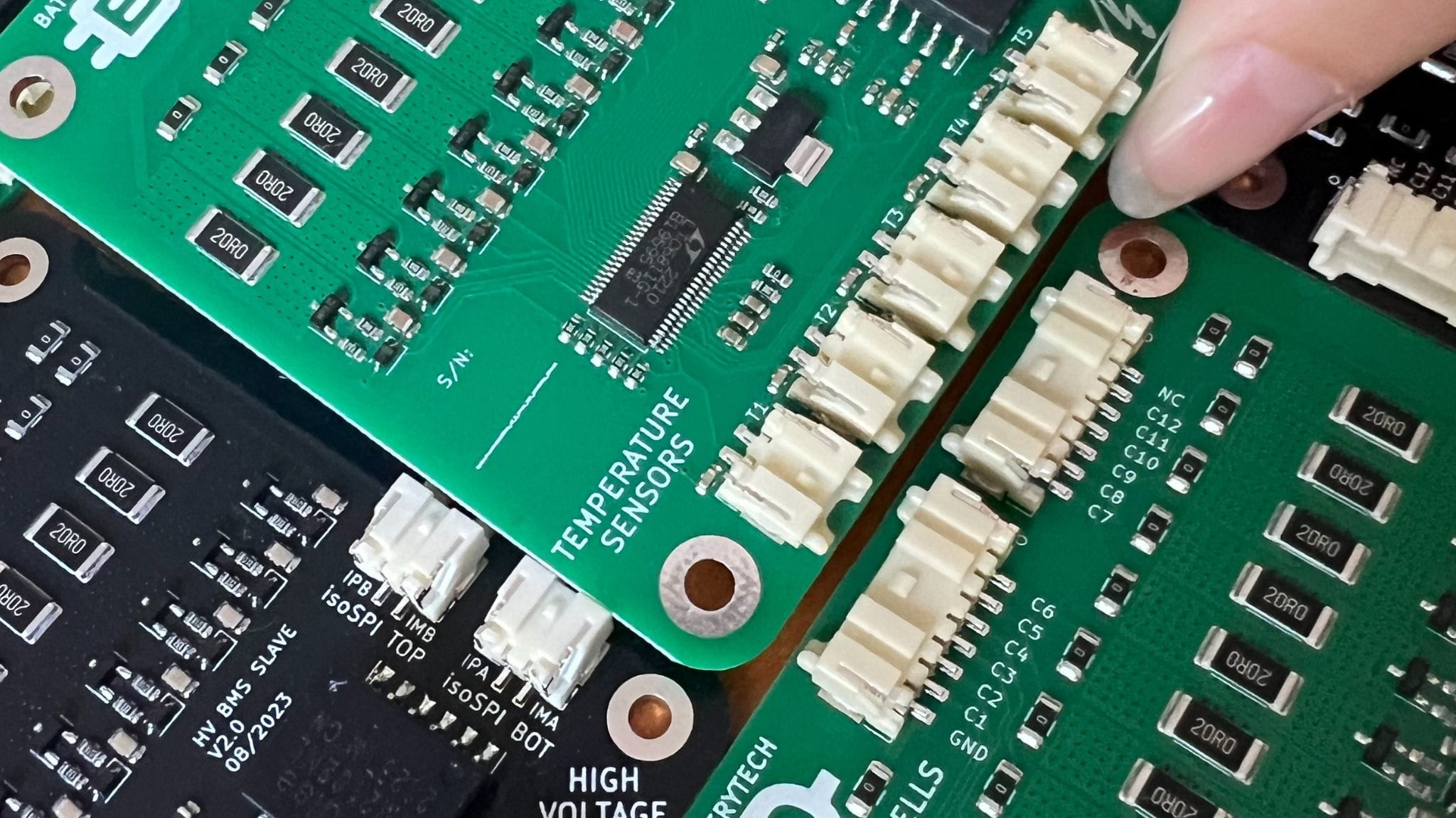
BMS board for battery management from Ennovation Technology
V2G in Poland – current state and development prospects
In Poland, V2G technology is still in its early stages of development. However, pilot projects and research are being conducted to explore its potential in Polish conditions.
One example is the Innogy GO+EAuto project, which tested the use of electric cars as energy storage units in the power grid. This project used Nissan Leaf electric cars, which were charged with energy from renewable sources and sent it back to the grid during peak demand.
V2G Globally
Globally, V2G is being implemented in countries like Denmark and the United States, with advanced pilot and demonstration projects underway. Denmark, a leader in renewable energy, utilizes V2G to stabilize its power grid and integrate wind farms, while in the United States, projects focus on using electric vehicles for ancillary services like frequency and voltage regulation. These countries’ experiences offer valuable insights for Poland as it develops and implements the technology.
The prospects for V2G development in Poland are promising. The development of electromobility and ongoing energy transformation are key factors driving V2G adoption. Furthermore, government plans and strategies are creating favorable conditions for widespread implementation of this technology.
Summary
V2G technology has the potential to become an important element of the energy transition in Poland. By enabling bidirectional energy flow between electric vehicles and the grid, the technology can contribute to grid stabilization, increased RES share, lower operating costs of electric vehicles, and reduced CO2 emissions. V2G can play a key role in building a more sustainable and flexible energy system that will be able to meet the growing demand for energy and the challenges associated with climate change.