

In the first months of 2025, the Polish energy sector is painfully feeling the consequences of a lack of flexibility in managing surplus energy from renewable sources. Although the share of renewables (RES) in the national energy mix is growing, the transmission system operator is increasingly forced to limit the output of wind and solar farms. The reason is an oversupply of energy in the system and the lack of efficient storage solutions. As a result, energy that could power homes, businesses, or infrastructure is simply wasted.
In March alone, as much as 140.5 GWh of potential energy production was curtailed—more than twice as much as the year before. This highlights that without investments in energy storage systems that can collect excess power and release it during peak hours, Poland won’t be able to fully capitalize on its green energy potential. [1]
The Scale of the Problem – How Often is Renewable Energy Curtailed?
The scale of RES curtailment in Poland at the beginning of 2025 clearly shows that the power system cannot keep up with the pace of renewable energy production.
In January, there were four days when operators had to limit wind farm output—the only sources affected that month. A record 32.2 GWh of potential wind energy was curtailed. That month, wind power accounted for 75.2% of RES generation, producing 3.2 TWh. In comparison, in December 2024 curtailments reached 11.4 GWh, while in January 2024 there were no such limitations on wind farms.
In February, both solar (three times) and wind farms (once) were curtailed.
In March, the situation worsened: for 17 days, system operators reduced RES output, blocking as much as 140.5 GWh of energy. [2]
Most curtailments affected solar power (17 orders), despite its smaller share of the mix—1.4 TWh vs. 1.8 TWh from wind. [3]
| Month | Curtailment Days | Wind Curtailments | PV Curtailments | Wind Production (TWh) | PV Production (TWh) | Cumulative Non-Market Curtailment (GWh) |
|---|---|---|---|---|---|---|
| January | 4 days | 4 times | No | 3.2 | 0.4 | 32.2 |
| February | 4 days | 1 time | 3 times | 1.4 | 0.8 | 37 |
| March | 17 days | 7 times | 17 times | 1.8 | 1.4 | 140.5 |
Why is Renewable Energy Being Curtailed?
Curtailments of renewable energy stem from system limitations that cannot keep up with the pace of the green transition. The key issue is balancing supply and demand—during times of low electricity demand (e.g., weekends, holidays, or favorable weather conditions), RES production exceeds the grid’s capacity to absorb it. In such cases, transmission system operators must reduce output to prevent destabilizing the National Power System (KSE).
The problem is worsened by the low flexibility of conventional sources like coal or gas power plants. Their high technical minimums mean they cannot quickly adjust to fluctuations in RES production—they can’t be easily shut down to “make room” for renewables. Additionally, Poland still has very few large-scale energy storage facilities that could store excess energy and release it later.
Energy storage is particularly important for manufacturing companies, where sudden power outages can result in major financial and operational losses. Interruptions in machine or production line operations can cause not only downtime but also damage to materials or semi-finished products.
Industries most at risk include food processing, chemical, pharmaceutical, and metallurgy—where precision and continuity are critical. In healthcare, reliable power is literally a matter of life and death, as outages can paralyze life-support devices and endanger patients.
These industries are increasingly investing in energy storage systems to secure continuity, minimize losses, and increase resilience against grid instability.
Contact our experts to help select the right energy storage system for your needs.
Agnieszka Solarz: +48 691 104 591, a.solarz@ennovationtech.eu
Janusz Zyla: +48 691 104 596, j.zyla@ennovationtech.eu
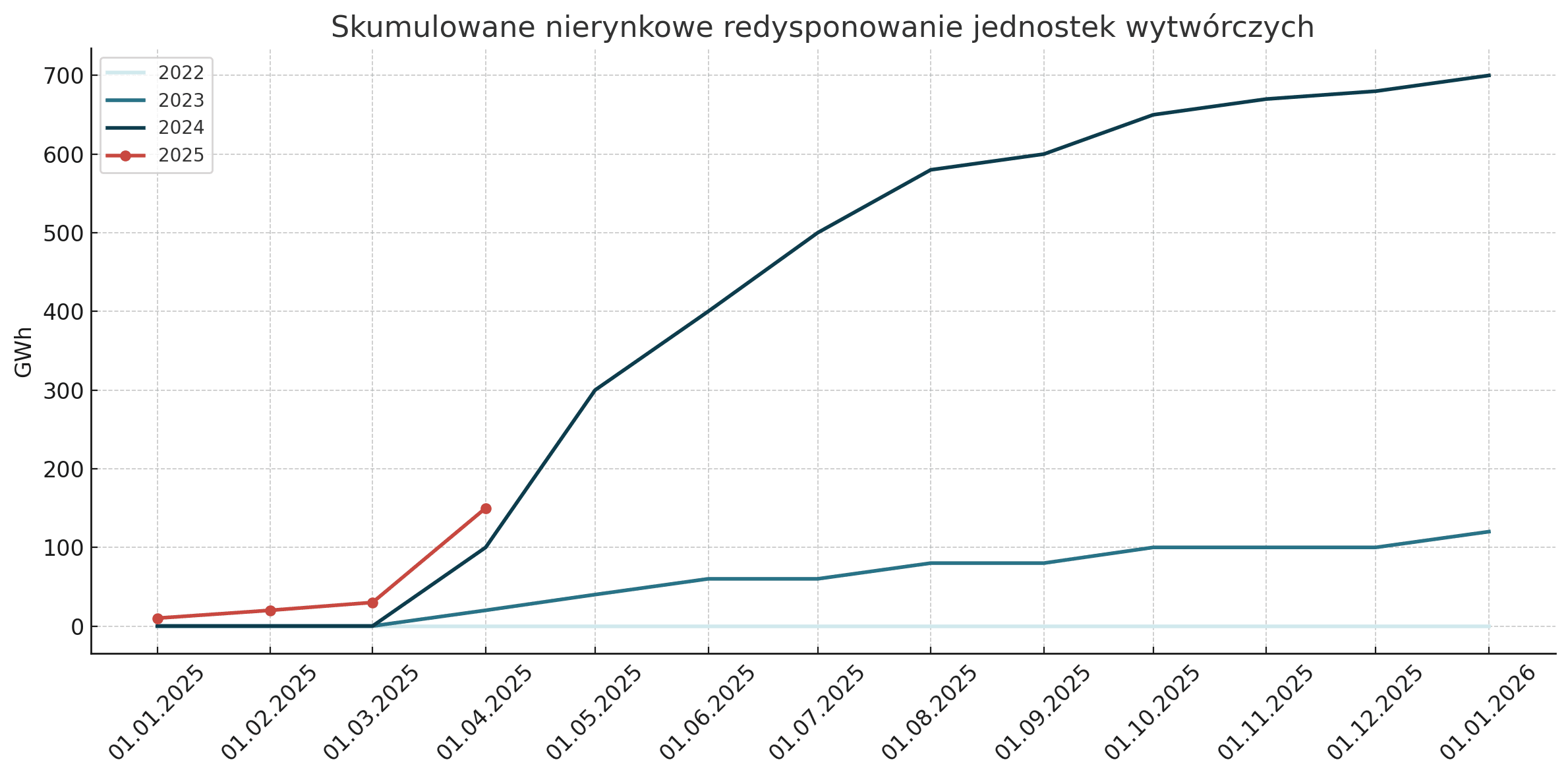
Cumulative Non-Market Curtailment of Generating Units
The number of non-market curtailments—forced limitations of wind and solar energy production—is steadily growing.
This phenomenon, as shown in the graphs below, doesn’t stem from technical failures, but from energy overproduction during periods of low demand and a lack of storage or export options. These interventions by the transmission system operator (PSE) are intended to prevent the National Power System (KSE) from overloading and losing regulatory capacity.
However, the scale of curtailments could be significantly smaller if, for example, power plants developed energy storage systems. [4]
Compensation
It’s important to note that every order from PSE to limit renewable generation entitles the affected producers to compensation. This obligation comes directly from EU Regulation 2019/943. While unit rates for reduced production are not specified, producers can claim reimbursement for lost revenue. This applies to both large wind farms and solar system owners subject to curtailment. To receive compensation, a proper application must be submitted to the operator. [3]
Energy Storage – The Solution and Missing Link in the Energy Transition
The primary role of energy storage systems is to capture excess electricity during overproduction—such as during strong wind or intense sunlight—and release it during periods of high demand. This allows for effective balancing of supply and demand, essential for power grid stability. [5]
Therefore, integrating storage with the power system enables fuller utilization of green energy by reducing the need for non-market curtailments of RES, as discussed earlier.
It’s worth noting that Poland is increasingly recognizing the importance of energy storage in its energy transformation. The National Fund for Environmental Protection and Water Management launched a program to co-finance energy storage construction, allocating PLN 4 billion for this purpose.
The aim of the program is to improve the stability of the National Grid and increase the country’s energy security. [7]
Applications for the program are open until May 30, 2025, and Ennovation‘s storage systems meet all grant criteria.
Contact our experts to secure your spot on the project list:
Agnieszka Solarz: +48 691 104 591, a.solarz@ennovationtech.eu
Janusz Zyla: +48 691 104 596, j.zyla@ennovationtech.eu